- Ana Sayfa
- Bulb Flat
Bulb Flat
Bulb Flat Steel – Sizes, Dimensions, Weight Chart & Shipbuilding Use
Bulb Flat is a unique steel profile widely recognized in the shipbuilding industry for its ability to deliver strength, stability and efficiency in demanding marine environments. The characteristic bulb-like edge provides greater resistance against buckling compared to flat bars, while reducing weight and saving material costs.
Engineers, shipbuilders and steel buyers consider Bulb Flat Steel as one of the essential products in naval, marine and offshore projects. As a supplier, HL Metal Demir Çelik provides Bulb Flat Bar and Bulb Flat Section in standard shipbuilding grades with full certification for global yards.
What Is Bulb Flat Steel?
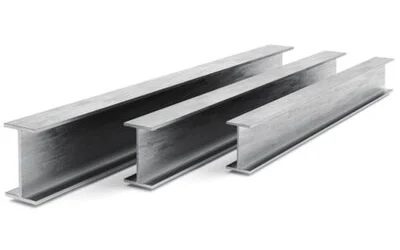
Bulb Flat Steel is a rolled steel product with a flat body and a small “bulb” along one edge. This geometry provides superior structural strength and stiffness, making it highly effective in shipbuilding and marine applications.
Compared to traditional flat bars, the Bulb Flat Bar offers improved stiffness, reduced weight and less welding time due to its optimized shape. The Bulb Flat Section is used as a stiffener in ship hulls, decks and offshore structures, increasing resistance to stress and improving safety margins.
The Bulb Flat Profile is commonly manufactured in steel grades such as S235, S275 and S355 to meet international shipbuilding standards and classification society requirements.
Bulb Flat Sizes, Dimensions & Weight Chart
Below are typical Bulb Flat sizes with corresponding dimensions and theoretical weights. These data help naval architects, shipyards and buyers estimate tonnage, cost and structural performance.
| Size (b x t) | b (mm) | t (mm) | c (mm) | r (mm) | Area (cm²) | Weight (kg/m) | Surface (m²/m) | dx (cm) | Ix (cm⁴) | Wx (cm³) |
|---|---|---|---|---|---|---|---|---|---|---|
| 60 x 4 | 60 ±1,5 | 4 +0,7 / -0,3 | 13 | 3,5 | 3,58 | 2,81 | 0,146 | 3,82 | 12,2 | 3,2 |
| 60 x 5 | 60 ±1,5 | 5 +0,7 / -0,3 | 13 | 3,5 | 4,18 | 3,28 | 0,148 | 3,7 | 14,4 | 3,89 |
| 60 x 6 | 60 ±1,5 | 6 +0,7 / -0,3 | 13 | 3,5 | 4,78 | 3,75 | 0,150 | 3,62 | 16,4 | 4,55 |
| 80 x 5 | 80 ±1,5 | 5 +0,7 / -0,3 | 14 | 4 | 5,41 | 4,25 | 0,189 | 4,9 | 33,87 | 6,91 |
| 80 x 6 | 80 ±1,5 | 6 +0,7 / -0,3 | 14 | 4 | 6,21 | 4,88 | 0,191 | 4,78 | 38,7 | 8,15 |
| 80 x 7 | 80 ±1,5 | 7 +0,7 / -0,3 | 14 | 4 | 7 | 5,5 | 0,194 | 4,69 | 43,3 | 9,24 |
| 80 x 8 | 80 ±1,5 | 8 +0,7 / -0,3 | 14 | 4 | 7,8 | 6,12 | 0,196 | 4,62 | 48 | 10,39 |
| 100 x 6 | 100 ±1,5 | 6 +0,7 / -0,3 | 15,5 | 4,5 | 7,74 | 6,08 | 0,234 | 5,98 | 76,1 | 12,7 |
| 100 x 7 | 100 ±1,5 | 7 +0,7 / -0,3 | 15,5 | 4,5 | 8,74 | 6,86 | 0,236 | 5,87 | 85,3 | 14,5 |
| 100 x 8 | 100 ±1,5 | 8 +0,7 / -0,3 | 15,5 | 4,5 | 9,74 | 7,65 | 0,238 | 5,78 | 94,3 | 16,3 |
| 200 x 9 | 200 ±3 | 9 +1 / -0,4 | 28 | 8 | 23,66 | 18,57 | 0,457 | 12,12 | 942 | 77,7 |
| 220 x 10 | 220 ±3 | 10 +1 / -0,4 | 31 | 9 | 29 | 22,77 | 0,503 | 13,35 | 1396 | 105 |
| 240 x 11 | 240 ±3 | 11 +1 / -0,4 | 34 | 10 | 34,89 | 27,39 | 0,549 | 14,58 | 1997 | 137 |
| 260 x 12 | 260 ±3 | 12 +1 / -0,4 | 37 | 11 | 41,31 | 32,43 | 0,595 | 15,81 | 2774 | 175 |
| 280 x 13 | 280 ±3 | 13 +1 / -0,4 | 40 | 12 | 48,28 | 37,9 | 0,641 | 17,04 | 3757 | 221 |
| 300 x 13 | 300 ±3 | 13 +1,2 / -0,4 | 43 | 13 | 52,79 | 41,44 | 0,685 | 18,45 | 4722 | 256 |
| 320 x 14 | 320 ±4 | 14 +1,2 / -0,4 | 46 | 14 | 60,85 | 47,6 | 0,732 | 19,68 | 6168 | 313 |
| 340 x 14 | 340 ±4 | 14 +1,2 / -0,4 | 49 | 15 | 65,54 | 51,5 | 0,776 | 21,1 | 7,54 | 357 |
| 370 x 15 | 370 ±4 | 15 +1,2 / -0,4 | 53,5 | 16,5 | 77,1 | 60,5 | 0,844 | 23,06 | 10,483 | 456 |
| 400 x 16 | 400 ±4 | 16 +1,2 / -0,4 | 58 | 18 | 89,48 | 70,2 | 0,912 | 25 | 14,211 | 568 |
| 430 x 20 | 430 ±4 | 20 +1,2 / -0,4 | 62,5 | 19,5 | 115 | 90,8 | 0,986 | 26,3 | 21,18 | 804 |
A full Bulb Flat weight chart including all intermediate sizes can be supplied as a separate PDF or technical annex along with classification approvals and section properties.
Bulb Flat Standard & Classification
Every Bulb Flat Standard follows specific international norms to guarantee performance and safety in shipbuilding and marine structures. Common standards include:
- EN 10025 (Europe): S235, S275, S355 structural grades.
- ASTM A36 / A572 (USA): frequently used in global projects.
- JIS SS400 / SM490 (Japan): widely used in Asian shipyards.
Compliance with major classification societies is essential for Bulb Flat for Shipbuilding, including: DNV, ABS, BV, LR and others. HL Metal can supply bulb flats with class approvals as required.
Bulb Flat for Shipbuilding
Bulb Flat for Shipbuilding is an integral component of naval construction. Typical uses include:
- Hull reinforcement and side shell stiffeners
- Deck stiffeners and longitudinal girders
- Bulkhead and tank stiffeners
- Internal structural framing and web stiffeners
Shipyards value Shipbuilding Bulb Flat because it reduces welding time and material consumption compared to standard flat bars, while improving structural performance.
Marine Bulb Flat & Offshore Use
The terms Marine Bulb Flat and Shipbuilding Bulb Flat are often used interchangeably and refer to the same product group used to reinforce ship structures.
Beyond vessels, offshore platforms, ports and coastal facilities also rely on Bulb Flat Steel for their durability, load capacity and cost-effectiveness.
The marine environment demands products that are both durable and resistant to corrosion. For this reason, Marine Bulb Flat is often delivered with additional treatments such as:
- Shot blasting and shop priming
- Marine-grade coating systems
- Hot-dip galvanizing for specific applications
Commercial Perspective – Bulb Flat Suppliers & Manufacturers
Working with a reliable Bulb Flat Steel Supplier or certified Bulb Flat Steel Manufacturer is critical for securing consistent quality, documentation and on-time delivery.
Key benefits of selecting an experienced supplier include:
- Access to international stock and multiple sizes
- Technical support and section optimization
- Complete documentation and classification approvals
- On-time delivery for global projects and tight schedules
HL Metal Demir Çelik supports shipyards, fabricators and EPC contractors with Bulb Flat Steel and complementary marine steel products for export projects.
Bulb Flat Price – What Affects the Cost?
Bulb Flat Price depends on several main factors:
- Steel grade: S235, S275, S355 or higher-strength shipbuilding grades.
- Dimensions & sizes: width, thickness and length requirements.
- Surface treatment: as-rolled, shot blasted, primed, galvanized.
- Quantity & order volume: bulk orders generally benefit from better rates.
- Delivery terms: EXW, FOB, CFR, CIF or DAP depending on destination port or yard.
Reliable suppliers offer transparent pricing that includes all elements defined in the specification: material, processing, coating, packing and logistics.
Bulb Flat Specification & Documentation
The Bulb Flat Specification is a technical document that defines the product’s chemical composition, mechanical properties, dimensional tolerances and surface condition.
Typical specification content includes:
- Yield strength and tensile strength values
- Elongation percentage and impact test results (if required)
- Thickness and width tolerances according to standard
- Surface quality, finish and coating systems
- Certification according to EN 10204 (3.1 / 3.2)
By following the Bulb Flat Specification, engineers and procurement managers can confidently select the right product for their projects and satisfy shipbuilding authority requirements.
Related Steel Products & Helpful Links
Bulb flat stiffeners are often used together with plates, hollow sections and marine piping. Explore related HL Metal product pages:
- Steel Sheets & Plates – Shipbuilding & Structural Grades
- Hollow Sections – Square & Rectangular RHS / SHS
- Stainless Steel Pipes – Marine & Process Piping
- Our Services – Cutting, Blasting, Priming & Processing
- Metal Weight Calculator – Plates, Flats, Profiles
For plate supply combined with Bulb Flat Steel, you can also explore our steel service center capabilities for nesting, cutting and marking.
Contact HL Metal – Bulb Flat Steel for Shipbuilding
From Bulb Flat Steel to Bulb Flat Bar, Bulb Flat Section and Bulb Flat Profile, this product group is a cornerstone of shipbuilding efficiency, marine safety and structural reliability.
Understanding Bulb Flat Sizes, Bulb Flat Dimensions and using a Bulb Flat Weight Chart helps optimize tonnage and cost. Ensuring compliance with the correct Bulb Flat Standard and reviewing the Bulb Flat Specification provides confidence in performance and safety.
📧 Request Bulb Flat Offers & Technical Support
Share your stiffener schedule, plate thicknesses, grades and delivery terms and our export team will prepare a competitive, optimized offer for Bulb Flat Steel and complementary shipbuilding products.
Contact HL Metal – Request Bulb Flat QuoteThis article explores everything about Bulb Flat Steel, including Bulb Flat Bar, Bulb Flat Section, Bulb Flat Profile, along with details on Bulb Flat Sizes, Bulb Flat Dimensions, Bulb Flat Weight Chart, Bulb Flat Standard, and Specification. It also provides commercial insights about Bulb Flat Steel Supplier, global availability to factors influencing Bulb Flat Price.
Shipbuilding Steel Plates: Overview
Shipbuilding Steel Plates—also called marine steel plates—are engineered for hulls, decks, bulkheads, and offshore structures where strength, toughness, and corrosion resistance are critical. Their balanced chemistry and controlled rolling deliver reliable weldability and consistent performance in demanding marine environments.Key Properties
High Mechanical Strength
Modern grades deliver high yield-to-weight ratios, improving payload capacity while maintaining structural integrity.Impact Toughness
Designed to resist brittle fracture at low service temperatures—essential for Arctic routes and cold seawater exposure.Corrosion & Coating Compatibility
Optimized for marine coatings, primers, and optional shot-blast & shop-primer finishes for faster fabrication.Weldability & Formability
Controlled carbon equivalent supports efficient cutting, bending, and welding with reduced preheat requirements.Grades & Standards
Classification Societies
Plates are certified by international bodies, including ABS, LR, DNV, BV, RINA, and CCS to ensure compliance with ship design rules.Common Strength Levels
Typical higher-strength marine grades include AH36, DH36, EH36, and FH36, selected according to location in the vessel, design loads, and service temperature profile.Optional Requirements
- Ultrasonic testing (UT) for internal soundness
- Z-direction properties (e.g., Z25/Z35) for through-thickness performance
- Charpy impact testing at specified temperatures
- Shot-blasting & shop-priming for immediate weld-line readiness
Applications
- Hull structures of bulk carriers, tankers, containers, RO-RO and LNG vessels
- Decks, bulkheads, stringers, and longitudinal frames
- Offshore platforms, jackets, topsides, and subsea support structures
- Naval and coast-guard craft requiring robust, weight-efficient plate solutions
Dimensions & Customization
Standard Size Range
- Thickness: ~4–200 mm (project-dependent)
- Width: up to ~4000 mm
- Length: up to ~20,000 mm
Processing Options
- Cut-to-length, beveling, drilling, and edge preparation
- Flattening and heat-treatment options per project spec
- Marking & traceability to mill heat and certificate
Quality Documentation
MTR/EN 10204 3.1 or 3.2 certificates, society stamps, and test reports accompany each delivery.Commercial Perspective
Supply & Lead Times
Global availability from mills and service centers enables a mix of ex-stock and mill orders. Lead times depend on grade, thickness, certification queue, and finishing requirements.Price Drivers
- Raw materials and energy costs
- Exchange rates and freight/logistics
- Certification scope (ABS/LR/DNV/BV/RINA/CCS)
- Thickness/width rarity and MOQ constraints
- Additional tests (UT, Z-properties) and shop-priming
Buyer Tips
- Request dual or multi-society approval when multi-yard use is possible
- Align plate sizes with nesting plans to reduce scrap
- Book UT/Z-properties early for critical joints
Why Choose Us
Certified Inventory
Wide range of AH36/DH36/EH36 with leading society approvals, ready for rapid dispatch.Technical Support
Application engineering for grade selection, welding procedures, and coating compatibility.Global Logistics
Sea, road, and multimodal options with export documentation and customs support.Conclusion
Shipbuilding Steel Plates remain the backbone of safe, efficient marine structures. With certified grades, robust properties, and tailored processing, they empower shipyards and offshore projects to meet modern performance targets while controlling weight, cost, and risk.Shipbuilding Steel Plates — Technical Table
| Grade | Classification Approvals | Yield Strength ReH (MPa) (typical min, t ≤ 50 mm) | Tensile Strength Rm (MPa) | Elongation A5 (%) | Impact Toughness (Charpy V) | Delivery Condition | Typical Thickness Range (mm) | Typical Uses | Weldability Typical CEQ (max) |
|---|---|---|---|---|---|---|---|---|---|
| A / B (Normal Strength) | ABS, LR, DNV, BV, RINA, CCS | ≥ 235 | 400 – 520 | ≥ 22 | ≥ 27 J @ 0 °C (L) | AR / N / TMCP | 4 – 50 | Hull plating, decks, bulkheads | ≤ 0.35 |
| D (Normal Strength) | ABS, LR, DNV, BV, RINA, CCS | ≥ 235 | 400 – 520 | ≥ 22 | ≥ 27 J @ −20 °C (L) | N / TMCP | 6 – 80 | Cold-service areas, frames | ≤ 0.35 |
| E (Normal Strength) | ABS, LR, DNV, BV, RINA, CCS | ≥ 235 | 400 – 520 | ≥ 22 | ≥ 27 J @ −40 °C (L) | N / TMCP | 6 – 80 | Low-temperature zones, stringers | ≤ 0.36 |
| AH36 (Higher Strength) | ABS, LR, DNV, BV, RINA, CCS | ≥ 355 | 490 – 620 | ≥ 21 | ≥ 34 J @ 0 °C (L) | N / TMCP | 6 – 120 | Primary hull, decks, heavy scantlings | ≤ 0.40 |
| DH36 (Higher Strength) | ABS, LR, DNV, BV, RINA, CCS | ≥ 355 | 490 – 620 | ≥ 21 | ≥ 34 J @ −20 °C (L) | TMCP / N | 8 – 150 | Cold-route hulls, longitudinals | ≤ 0.42 |
| EH36 (Higher Strength) | ABS, LR, DNV, BV, RINA, CCS | ≥ 355 | 490 – 620 | ≥ 21 | ≥ 34 J @ −40 °C (L) | TMCP | 8 – 150 | Arctic service, critical joints | ≤ 0.43 |
| FH36 (Higher Strength) | ABS, LR, DNV, BV, RINA, CCS | ≥ 355 | 490 – 620 | ≥ 20 | ≥ 34 J @ −60 °C (L) | TMCP | 10 – 120 | Extreme low-temp structures | ≤ 0.43 |
Dimensions, Processing, and QA Options
| Parameter | Typical Capability / Option | Notes |
|---|---|---|
| Plate Width | Up to ~4000 mm | Project-specific wider widths on request |
| Plate Length | Up to ~20,000 mm | Cut-to-length for nesting optimization |
| Surface Preparation | Shot-blasted & Shop-Primed (Sa 2.5) | Typical primer 15–25 μm; weld-line ready |
| UT (Ultrasonic Testing) | EN 10160 S1/E1, S2/E2 | Higher classes for critical zones |
| Through-Thickness (Z properties) | Z15 / Z25 / Z35 | For thickness transitions & high triaxial stress |
| Dimensional Tolerances | EN 10029 Class N (or per society) | Flatness/rectangularity per PO |
| Edge & Bevel | Mill edge / flame-cut; V/Y bevels | Prepared to WPS requirements |
| Certificates | EN 10204 3.1 / 3.2 + Society Stamp | ABS / LR / DNV / BV / RINA / CCS |
| Heat Treatment | N (Normalized), TMCP | Choose TMCP for strength + low CEQ |
| Traceability | Heat-numbered plates, barcode labels | Full batch trace, MTR linkage |
Notes: Values shown are typical minima/availability ranges used in international practice. Final acceptance criteria, impact test temperatures/energy, delivery condition, and tolerances must follow the applicable classification society rules and the project specification/Purchase Order.