- Ana Sayfa
- HEB Beams-H Shape Steel Structure
HEB Beams-H Shape Steel Structure
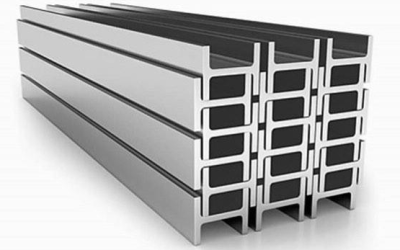
HEB Beams (H Shape Steel Structure)
HEB Beams one of the most commonly used structural steel elements in modern construction projects. Known for its high load-bearing capacity and efficiency, HEB Profile offers superior stability in both vertical and horizontal applications. Whether it is a high-rise building, an industrial facility, or a bridge, HEB Steel Beam is a reliable solution.
HEB Section and HEB Steel Profile
The HEB Section is designed according to European standards and ensures uniform performance under heavy loads. Each HEB Steel Profile is manufactured with precise tolerances, making it ideal for structural frameworks, warehouses, and heavy-duty constructions. Engineers often choose this profile for its durability and versatility in design.
HEB Beam Sizes, HEB Beam Dimensions, HEB Beam Weight Chart
| HEB Beam Sizes | Height (h) mm | Width (b) mm | Web Thickness (tw) mm | Flange Thickness (tf) mm | Weight (kg/m) | Cross-Section Area (cm²) |
|---|---|---|---|---|---|---|
| HEB 100 | 100 | 100 | 6.0 | 10.0 | 20.4 | 26.0 |
| HEB 120 | 120 | 120 | 6.5 | 11.0 | 26.7 | 34.0 |
| HEB 140 | 140 | 140 | 7.0 | 12.0 | 33.7 | 43.0 |
| HEB 160 | 160 | 160 | 8.0 | 13.0 | 42.6 | 54.3 |
| HEB 180 | 180 | 180 | 8.5 | 14.0 | 51.2 | 65.2 |
| HEB 200 | 200 | 200 | 9.0 | 15.0 | 61.3 | 78.1 |
| HEB 220 | 220 | 220 | 9.5 | 16.0 | 71.5 | 91.1 |
| HEB 240 | 240 | 240 | 10.0 | 17.0 | 83.2 | 106.0 |
| HEB 260 | 260 | 260 | 10.0 | 17.5 | 93.0 | 118.0 |
| HEB 280 | 280 | 280 | 10.5 | 18.0 | 103.0 | 131.0 |
| HEB 300 | 300 | 300 | 11.0 | 19.0 | 115.0 | 146.0 |
Choosing the right H Steel Sizes is crucial for project efficiency. Depending on structural requirements, H Steel Dimensions vary in width, height, and thickness. To ensure accurate calculations, designers rely on the H Beam Weight Chart, which provides essential data on section area, weight per meter, and load capacity. For example, smaller beams are used in light frameworks, while larger sections are chosen for industrial-scale projects.
HEB Standard and Specifications
Every HEB Beam Standard complies with European Norms (EN) and international building codes. The Structural Steel Beam is manufactured in grades such as S235, S275, and S355, ensuring strength and reliability. The HEB I Beam and HEB Wide Flange Beam are variations that serve different load conditions but share the same high-performance characteristics.
The HEB Specification document typically includes:
Mechanical properties (yield strength, tensile strength)
Dimensional tolerances
Surface finishes (black, shot blasted, primed)
Certification according to EN 10204 (3.1 or 3.2)
Applications of HEB Beam for Construction
HEB Beam for Construction is widely used in industrial facilities, residential projects, bridges, and offshore platforms. Thanks to its geometry, it provides excellent resistance against bending and shear forces. Compared to lighter profiles, the Structural HEB Beam ensures long-term stability, making it indispensable in heavy-duty projects.
Comparison with Other Structural Profiles
| Profile Type | Shape | Flange Characteristics | Load Capacity | Typical Use Case |
|---|---|---|---|---|
| IPE Beam | Narrow “I”-shape | Thin, narrow flanges | Light loads | Light structural elements |
| HEA Beam | Wide “H”-shape | Thin, wide flanges | Medium loads | General structures |
| HEB Section | Wide “H”-shape | Thick, wide flanges | Heavy loads | Industrial & structural projects |
| HEM Beam | Extra-wide “H” | Extra thick & wide flanges | Extremely heavy loads | Heavy-duty frameworks |
H Shape Steel Structure Advantages and Features
H Shape Steel Structure offer significant advantages in carrying vertical gravitational loads and can also be effectively used to support horizontal forces. Widely utilized in modern construction and industrial applications, H shape steel structures are known for their high structural strength and are produced in a variety of sizes and weights to suit different project needs.
The variation in dimensions and weights allows users to easily select the most suitable option for their specific application. At HL Metal Demir Çelik Sanayi, we offer H Shape Steel Structure manufactured using advanced technology to ensure high performance and durability. In addition to standard production, we also provide custom manufacturing services based on customer requirements.
H Shape Steel Structure prices vary depending on the size and weight of the selected product. With our broad product range, you can easily find the right option for your intended application
H Shape Steel Structure
H Shape Steel Structure prices are determined according to the product’s dimensions and unit weight. To select the most technically suitable beam type for your project, please refer to our product guide or contact our expert sales representatives for professional support.
Alongside our standard size and weight options listed in our HEB beam price list, we also accept custom orders tailored to your project needs. For non-standard dimensions, our technical team will promptly provide a detailed price quotation.
By choosing from our high-quality production line, you can benefit from fast delivery options and receive your order within the specified lead time. Make your selection from our list and place your order today to ensure timely delivery and reliable structural performance.
HEB Beam Supplier, HEB Beam Manufacturer, High Quality Steel Profiles
Looking for a reliable HEB beam supplier or HEB beam manufacturer for your construction or industrial project? We provide a wide range of HEB steel beam in compliance with EN 10025 standards, including S235JR HEB beam, S275JR HEB beam, and S355JR H shape options to meet varying structural requirements.
Our inventory includes hot rolled HEB beams and welded HEB beams, available in standard and custom HEB beam sizes. Whether you need a wide flange HEB beam for load-bearing frames or a heavy duty HEB Profile for infrastructure development, we’ve got the right solution. Each steel HEB profile is precision-manufactured to ensure maximum strength and long-term performance.
We specialize in HEB beams for construction, HEB beams for steel structures, and HEB beams for building frames. As a trusted HEB beam exporter, we ship globally to customers in the civil engineering, industrial plant, and logistics sectors. Our HEB beam for bridges and HEB beam for warehouses are engineered for stability under extreme loads.
The HEB steel load capacity is ideal for modern applications requiring enhanced durability and support. Our high-performance H section and parallel flange HEB designs are engineered for optimal weight-to-strength ratios. We also offer high strength HEB steel options for demanding projects where structural integrity is paramount.
You can buy HEB beams online through our streamlined ordering process. As a leading HEB steel beam stockist, we maintain ready-to-ship inventory, ensuring fast delivery and competitive pricing. Our range of HEB section steel is suited for everything from residential foundations to high-rise construction.
Choose us as your universal beam HEB partner, and benefit from years of expertise, international standards compliance, and unparalleled customer service. Get in touch today to learn more about our HEB steel profile solutions.
Comparative Technical Table – HEB, HEA, HEM, IPE, UPE, IPN, UPN Profiles
The following table summarizes key European structural steel profiles. Data is presented in advanced technical English, highlighting geometry, load capacity, and typical applications for HEB, HEA, HEM, IPE, UPE, IPN, and UPN sections.
| Profile Type | Section Characteristics | Weight-to-Strength Ratio | Moment of Inertia / Section Modulus | Applications | Advantages |
|---|---|---|---|---|---|
| HEB (Wide Flange Beam) | Medium flange thickness; optimized height-to-width ratio | Balanced — economical weight vs. load-bearing | High; suitable for columns and main frames | Columns, frames, bridges, civil structures | Universal use, excellent stiffness, cost-effective |
| HEA (Light Wide Flange Beam) | Thinner flanges compared to HEB | Lightweight — reduced steel consumption | Moderate; suited for lighter loads | Roof purlins, secondary beams, light industrial halls | Reduced weight, easy handling, lower cost |
| HEM (Heavy Wide Flange Beam) | Very thick flanges; increased mass per meter | High — heavy-duty design | Very high; suited for high compression/bending | High-rise columns, heavy machine bases, bridges | Maximum stability, high load capacity |
| IPE (European I-Beam) | Narrow flange; high web height-to-width ratio | Efficient in bending along strong axis | Good inertia about major axis | Beams, rafters, long-span structures | Light, versatile, widely available |
| UPE (Parallel Flange Channel) | Parallel flanges with consistent thickness | Balanced; better weld surface than UPN | Efficient; good resistance in bending | Frames, trusses, support rails | Ease of fabrication, standardized tolerances |
| IPN (European I-Section) | Inclined flanges; traditional I-shape | Moderate; older design standard | Less efficient than IPE; lower inertia | General construction, beams, reinforcement | Still widely used, cost-competitive |
| UPN (Taper Flange Channel) | Tapered flanges; open channel shape | Good strength but torsional sensitive | Lower torsional resistance vs. UPE | Frames, lintels, secondary structures | Economic, available in wide size range |
Technical Notes
- HEA vs HEB vs HEM: same nominal dimensions, different flange thickness → weight and capacity scale accordingly.
- IPE vs IPN: IPE has parallel flanges → improved weldability and section modulus efficiency compared to IPN with tapered flanges.
- UPE vs UPN: UPE has parallel flanges → better for fabrication and bolted connections; UPN remains cost-competitive for general use.
- Standards: All sections produced per EN 10365 (formerly DIN 1025/1026).
Let’s Build Stronger Structures Together
Looking for a reliable HEB beam supplier with export experience, quality assurance, and transparent logistics? HL Metal delivers European-standard HEB beams under EN 10365 and EN 10025 standards to over 20 countries.
Whether you need guidance on HEB beam sizes, structural optimization, or export packaging for overseas delivery — our engineering and sales experts are ready to assist.
We respond to all inquiries within 24 hours. You can also request a quotation directly via our Online RFQ Form or explore more product pages such as HEA Beams and IPE Sections.
Thank you for visiting HL Metal — your trusted partner in HEB beams and global steel structure solutions.
Explore. Connect. Build with confidence.
HL Metal Demir Çelik Sanayi
Türkiye İhracatçılar Meclisi (TİM) üyesidir.
European Structural Steel Beams (Excluding HEB): A Practical Buyer’s Guide
This page focuses on major European steel beam families other than HEB. You will find a concise yet practical overview of HEA and HEM wide-flange sections, IPE and IPN I-shapes, and UPN/UPE channel profiles. We also summarize welded girders, composite strategies, coatings, export logistics, pricing dynamics, and sourcing tips. Use the internal links to jump to what you need, or skim the comparison table to shortlist profiles for your project.
Standards referenced include EN 10365 (dimensions), EN 10025 (steel grades), EN 10204 (inspection certificates) and related European norms.
HEA Beams — Lightweight Wide-Flange Efficiency
HEA beams are wide-flange shapes optimized for lower mass compared to heavier wide-flange families. With thinner flanges and generally smaller mass per meter, HEA is an excellent choice where structural efficiency and a lean weight budget are important. Engineers often specify HEA for secondary beams in buildings, mezzanines, platforms, and structures where gravity loads are moderate and serviceability criteria dominate over extreme bending capacity.
When to Choose HEA
- Weight-sensitive designs where dead load reduction is beneficial
- Secondary framing, purlins, and moderate-span floor systems
- Projects targeting cost-per-meter savings without sacrificing code compliance
Design Notes
Verify flange compactness for bending class checks, and evaluate lateral torsional buckling for slender spans. For vibration-critical floors (labs, offices), pair preliminary sizing with dynamic serviceability checks early.
HEM Beams — High-Capacity Wide-Flange Workhorses
HEM beams represent the heavy end of the European H-series. With thicker flanges and greater mass per meter, these sections provide robust bending resistance and stiffness. HEM members are commonly used as primary beams, transfer girders, and crane runway beams, especially where high moments, low deflections, or fatigue considerations apply.
When to Choose HEM
- Primary beams for long spans and heavy gravity loads
- Industrial settings with concentrated loads or dynamic actions
- Where deflection limits are stringent and stiffness is paramount
Design Notes
Heavier members can improve vibration performance. Check stability under combined bending and compression. For fabrication economy, consider stock lengths and splice strategy early to avoid waste and on-site delays.
IPE Beams — Slim Web, Versatile Applications
IPE (European I-section) shapes combine a relatively slim web with proportioned flanges, making them versatile for floor beams, frames, and architectural applications. Their geometry eases detailing and commonly fits standardized connection libraries. IPE is widely available in multiple grades and lengths, with broad compatibility across EU markets.
Advantages
- Good availability and cost-effective supply chains
- Balanced stiffness for floor systems and light-to-medium spans
- Efficient for mixed-use buildings and commercial fit-outs
Design Notes
Confirm shear capacity in deep webs under heavy loads, and account for openings or service penetrations during coordination with MEP. For composite slabs, coordinate shear connector pitch and stud clearance.
IPN Beams — Tapered-Flange Tradition
IPN sections feature tapered flanges and a more traditional “I” geometry. While modern projects often favor wide-flange shapes for fabrication convenience, IPN remains useful in refurbishment, matching existing members, and for specific aesthetic or detailing preferences. Availability can vary; confirm rolling programs and stock lists early during procurement.
Use Cases
- Refurbishment to match existing sections
- Projects with specific heritage or aesthetic requirements
- Economical solutions where tapered geometry is acceptable
UPN Channels — Classic U-Shape for Frames & Bracing
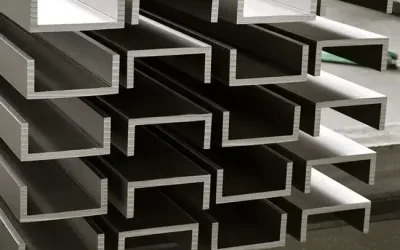
UPN channels are hot-rolled U-shaped sections with tapered flanges. They are common in frames, bracing, lintels, and assemblies where open sections simplify bolting, cladding interfaces, or service routing.
Advantages
- Open geometry for easy connections and service access
- Useful as edge members, lintels, and secondary frames
- Broad availability in standard lengths
UPE Channels — Parallel Flanges for Modern Detailing
UPE channels offer parallel flanges (unlike UPN’s taper), improving ease of connection and plate interfaces. They are well-suited for modular buildings, equipment skids, and frames that benefit from consistent flange thickness for bolted plates, gussets, or slide-in assemblies.
Use Cases
- Skid frames and equipment bases
- Modular structures and prefabricated assemblies
- Architectural trims where neat flange lines are preferred
Welded Girders & Tapered Members — Custom Strength Where You Need It
When catalog shapes cannot meet geometry or capacity requirements, welded plate girders unlock custom depths, flange widths, and thicknesses. Tapered members concentrate material where bending is highest while conserving mass elsewhere. This approach is excellent for long spans, irregular grids, and bridges. Coordinate weld procedures (WPS/PQR), NDT, and cambering with the fabricator, and ensure inspection classes match project specifications.
Key Checks
- Section classification and local buckling checks
- Weld throat sizes and fatigue detailing for cyclic loads
- Transport, lifting points, and site splice planning
Composite Beams — Steel + Concrete for Efficient Floors
Composite design pairs a steel beam with a concrete slab connected via shear studs. The result is improved stiffness and bending capacity, often enabling smaller steel sections or longer spans. This method is common with IPE or wide-flange members in offices, hospitals, and car parks. Detail shear connector spacing per design codes, verify fire protection strategy, and coordinate deck profiles and penetrations with the slab designer.
Benefits
- Higher efficiency and reduced deflection
- Potential weight and cost savings over non-composite solutions
- Simplified installation with standardized stud welding
Finishes & Corrosion Protection — From Primer to Galvanizing
Surface preparation and coating extend service life. Shot-blasting with a zinc-rich primer supports indoor dry environments, while hot-dip galvanizing is favored for outdoors, coastal atmospheres, or industrial settings. Duplex systems (galvanizing plus paint) can achieve longer maintenance cycles. For fire performance, integrate intumescent coatings or boards, and verify dry film thickness (DFT) against the required resistance period.
Documentation
- Coating system data sheets and DFT reports
- EN 10204 inspection certificates (2.2 or 3.1) for traceability
- Marking plans for bundles and piece IDs
Export & Logistics — Smarter Shipping for Global Projects
For international deliveries, coordinate Incoterms early (EXW, FCA, FOB, CFR, CIF, DAP, DDP) and align on documentation: commercial invoice, packing list, certificate of origin, and mill certs. Optimize bundles for crane capacity and container loading; standard 12-meter lengths fit well in 40’ equipment, while special lengths or heavy welded girders may require break-bulk or open-top options. Moisture-resistant packaging and edge protection reduce corrosion and transit damage risk.
Practical Tips
- Confirm port pair transit times and sailing frequency
- Reserve space for mixed loads (beams + channels + plates)
- Share unloading plan with site teams to accelerate off-load
Pricing & Sourcing — Getting the Best Value
Steel pricing reflects mill schedules, grade, size, finish, and logistics. For competitive quotes, standardize your RFQ: define section family (HEA, HEM, IPE, IPN, UPN, UPE), sizes and lengths, steel grade (e.g., S235JR, S355JR, S355J2), tolerances, finish (as-rolled, shot-blast + prime, galvanized), and delivery terms. Comparing like-for-like specs avoids hidden cost shifts. If lead time is critical, prioritize stock sections and service-center cutting with clear tolerances.
Checklist for RFQs
- Section type and designation list with lengths and quantities
- Grade and certificates required (EN 10204)
- Surface treatment and packaging requirements
- Incoterms, destination, and latest acceptable delivery date
Quick Comparison Table
| Family | Geometry | Typical Role | Key Advantage |
|---|---|---|---|
| HEA | Wide-flange, lighter | Secondary beams, weight-sensitive frames | Lower mass per meter |
| HEM | Wide-flange, heavier | Primary beams, high loads | Higher bending capacity & stiffness |
| IPE | I-section, slim web | Floors, frames, general use | Versatile and widely available |
| IPN | I-section, tapered flanges | Retrofit, aesthetic matches | Compatibility with legacy sections |
| UPN | U-channel, tapered | Bracing, lintels, edges | Open section for easy connections |
| UPE | U-channel, parallel flanges | Skids, modular frames | Connection-friendly flanges |
Closing Notes
Selecting the right beam family is about balancing capacity, stiffness, availability, and total installed cost. Use HEA for lightweight efficiency, HEM when strength and stiffness lead, IPE for versatile building frames, IPN for heritage compatibility, and UPN/UPE channels where open-section detailing pays dividends. For anything outside the catalog envelope, welded girders and composite strategies deliver custom performance with proven constructability.